
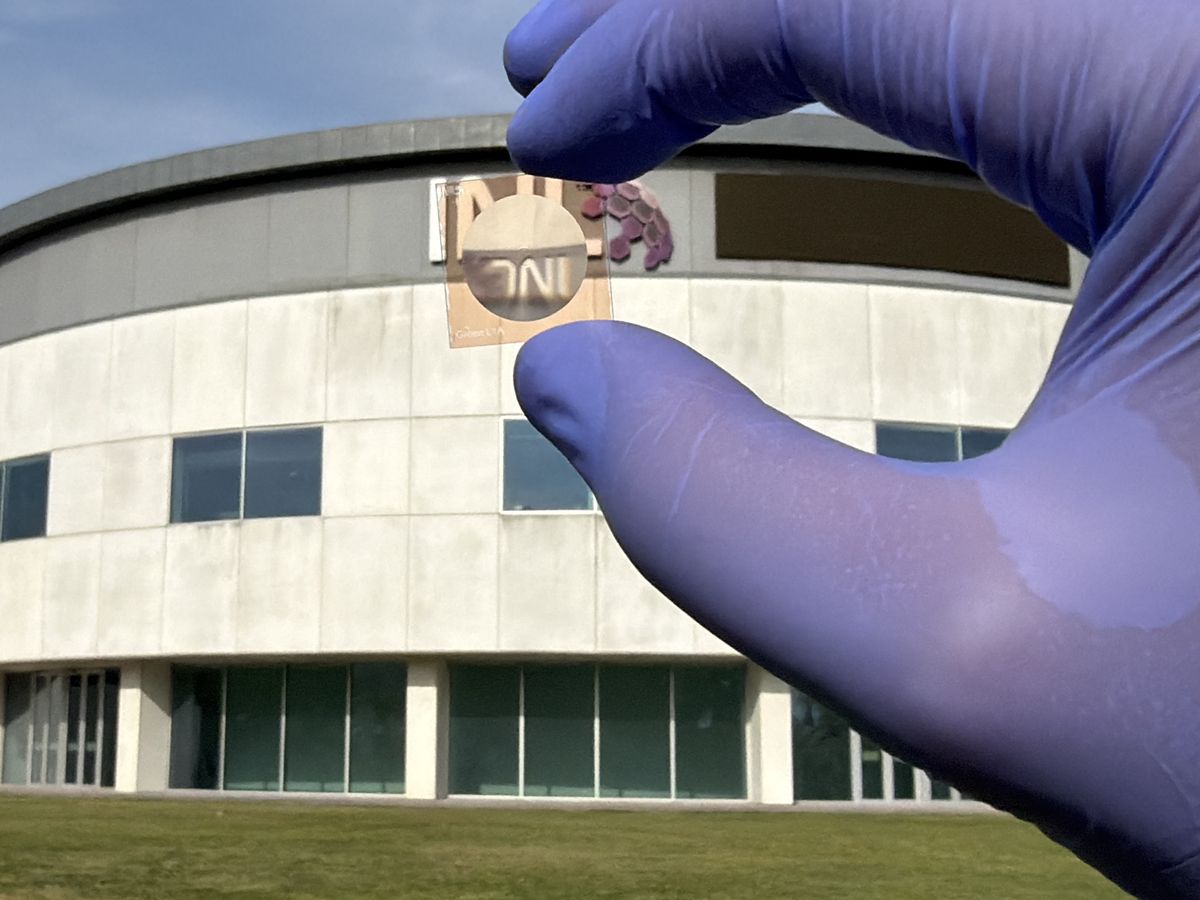
Large-aperture diffractive Fresnel lens
A diffractive Fresnel lens with an 18 mm aperture, held up against the INL building and imaging it.
- Aperture
- ø 18 mm
Flat optics and micro-optics from our cleanroom processes, imaged by SEM and characterized in the lab. Select an image to see it full size.
A diffractive Fresnel lens with an 18 mm aperture, held up against the INL building and imaging it.
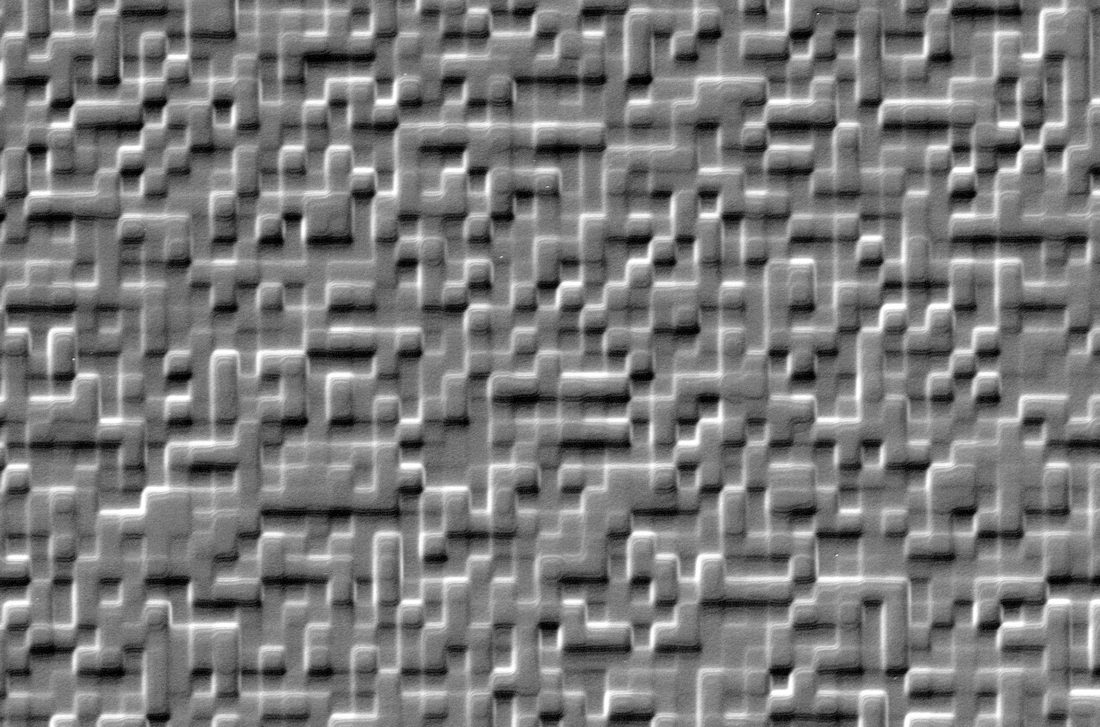
Detail of a multilevel hologram phase mask. The height of each pixel sets the phase it adds to the light, and together the pixels form the target image.
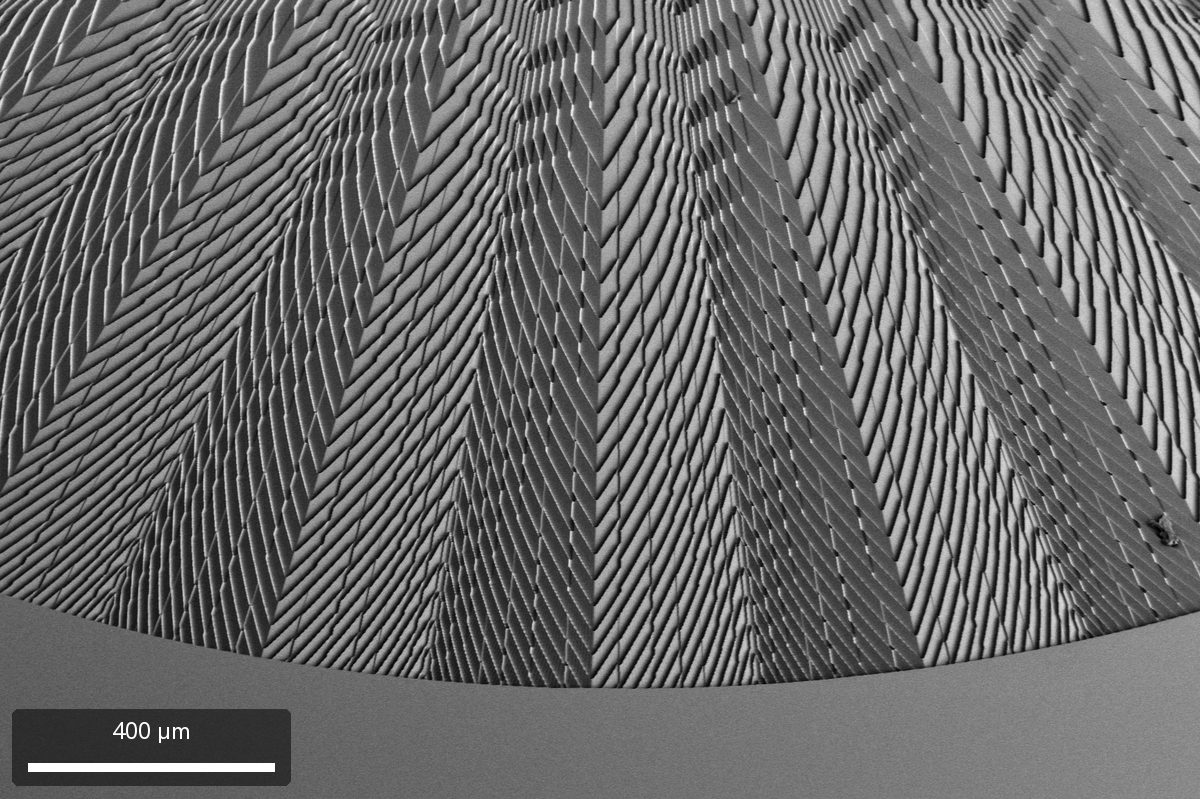
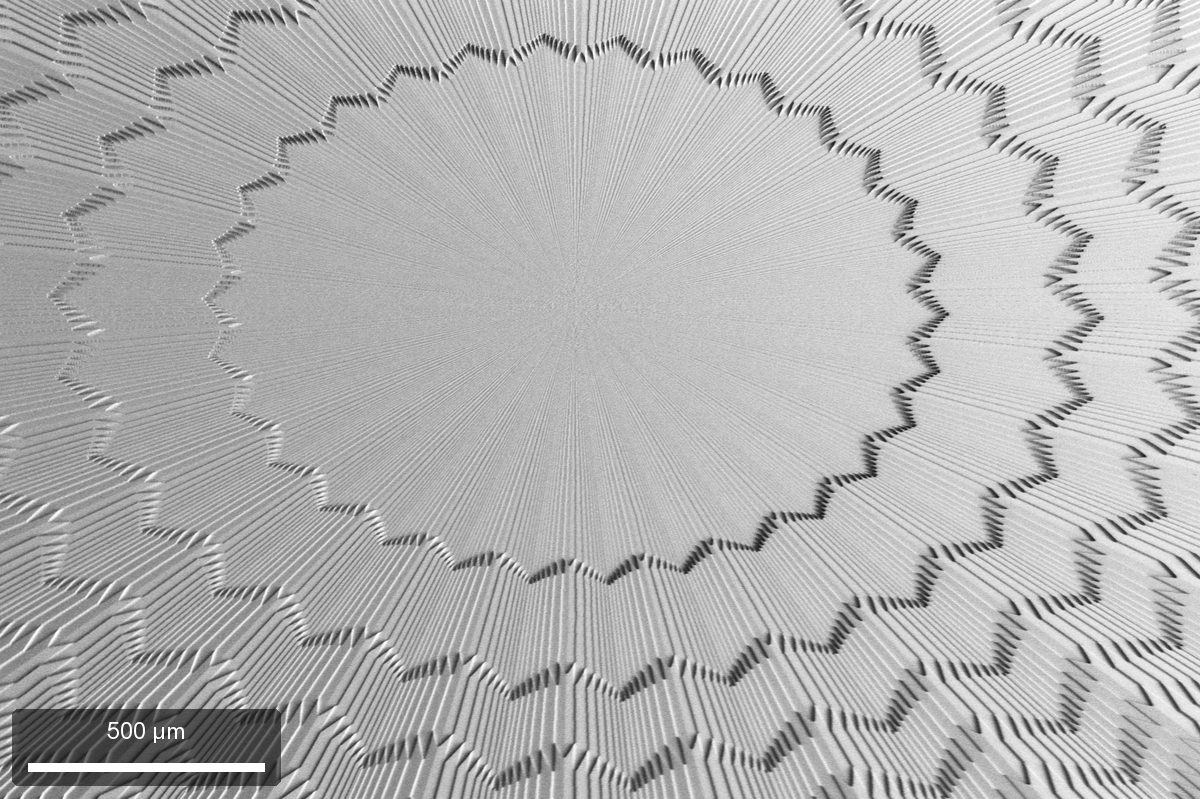
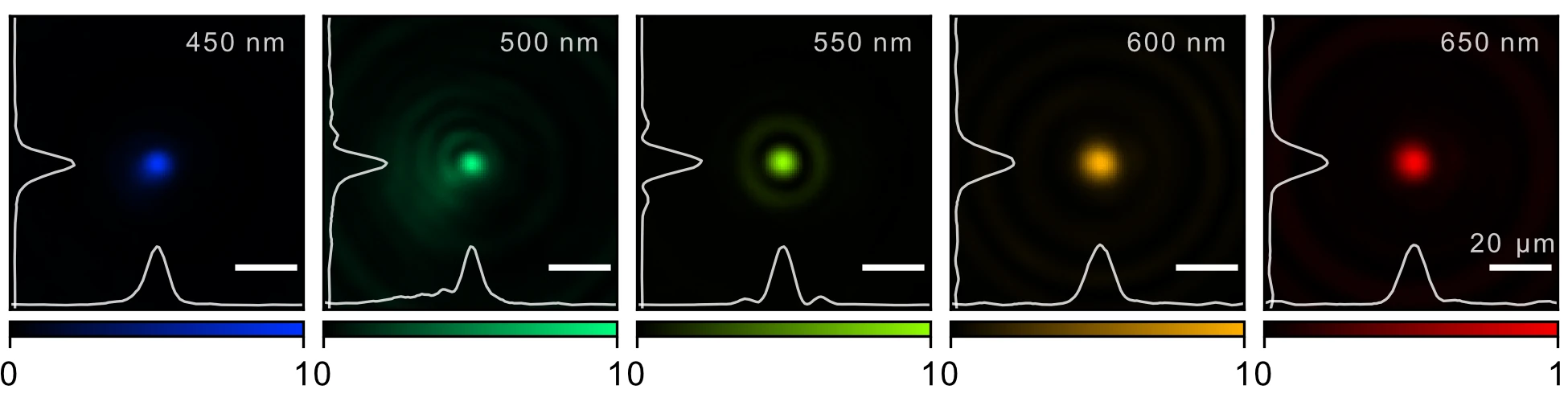
Two multilevel achromatic Rose lenses, designed with the azimuthally segmented polychromatic method from our J. Phys. Photonics paper. Each angular segment focuses a different wavelength to the same plane. Measured from 450 to 650 nm, the lens forms one focal spot at every wavelength.
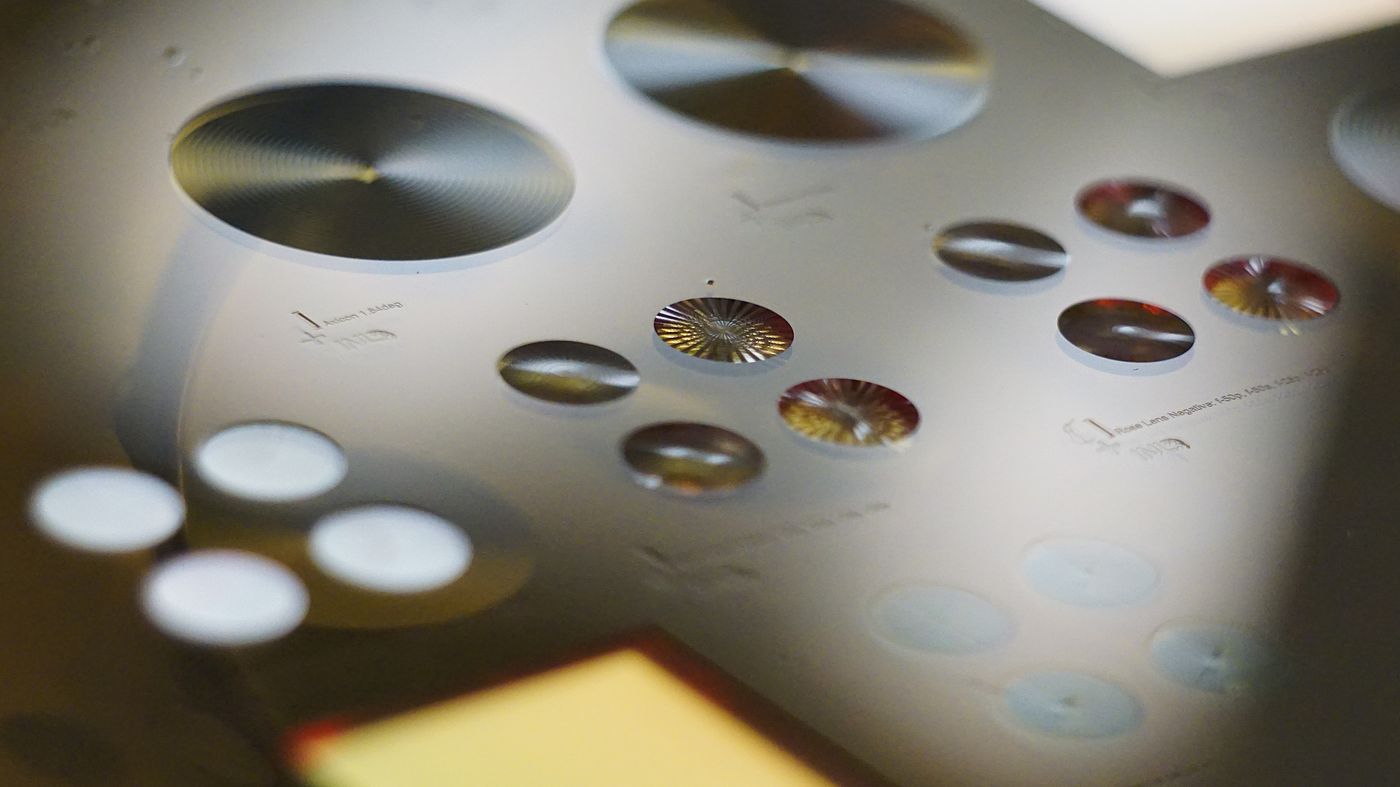
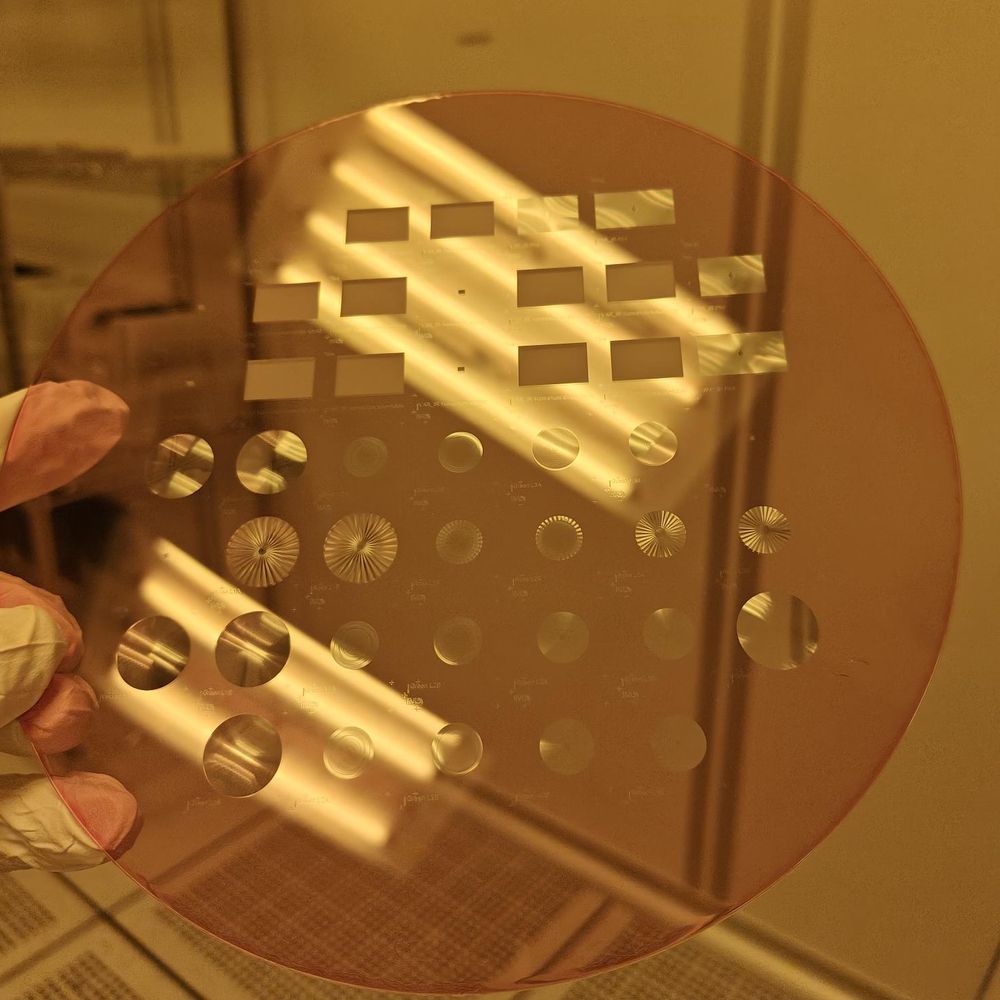
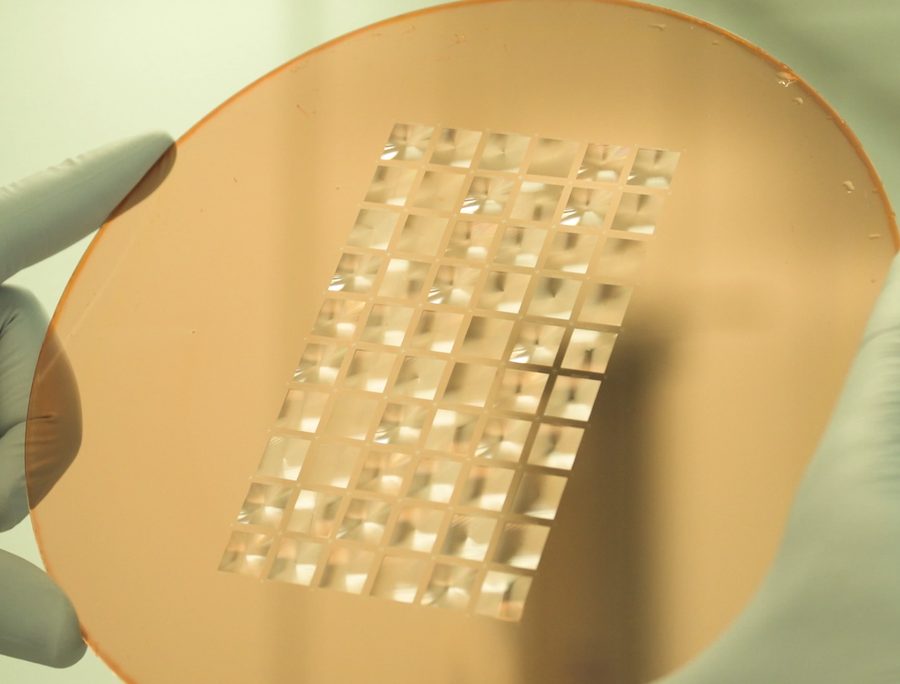
Many designs share one wafer, so a single run delivers axicons, lenses and holograms for several projects. The same process runs small production batches in the cleanroom.
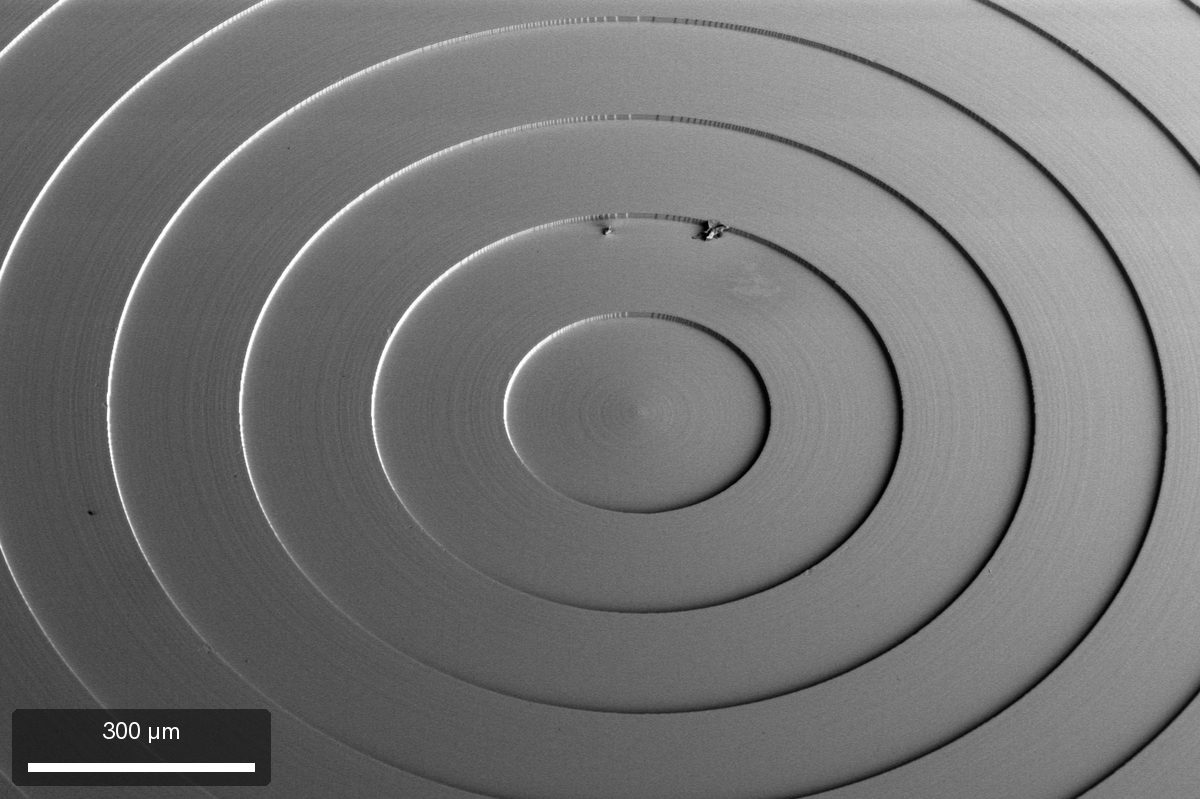
A multilevel axicon in polymer on a glass substrate. It turns a collimated beam into a Bessel beam with a long, narrow focal line.
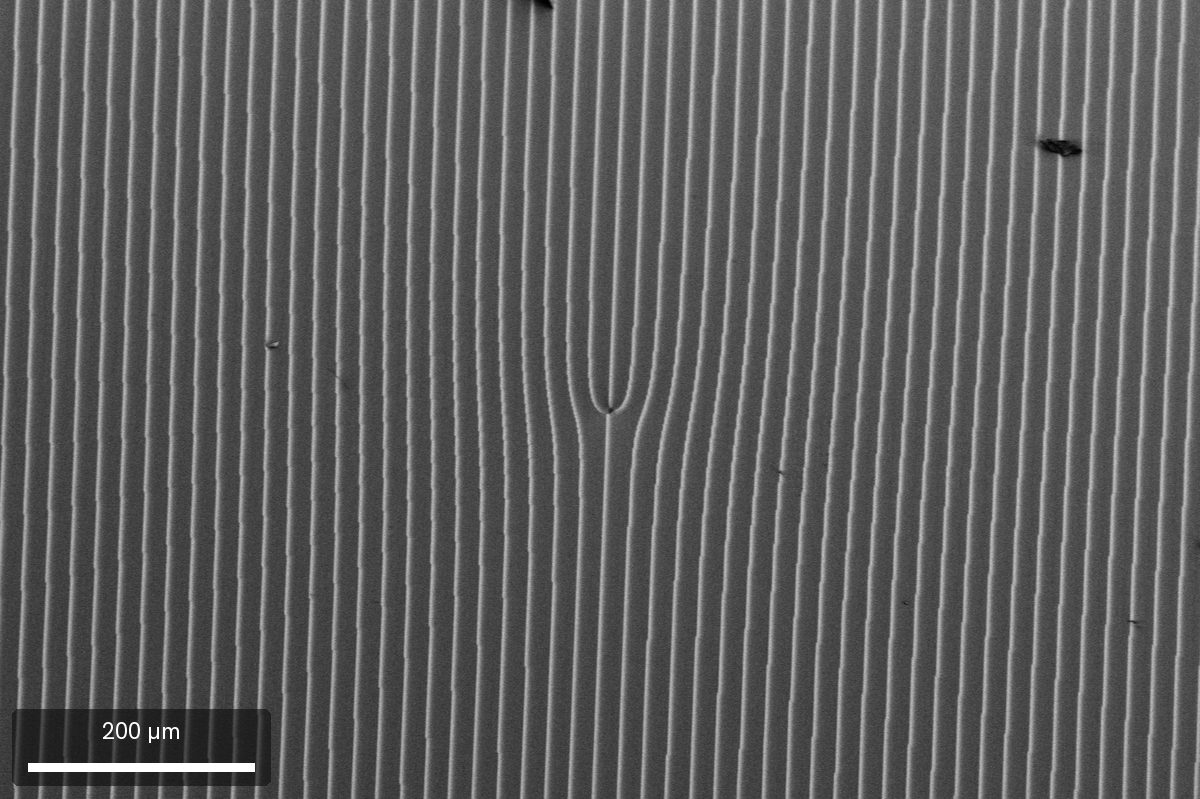
A grating with a fork dislocation at its centre. It splits the beam and sends an optical vortex, a beam carrying orbital angular momentum, into an off-axis order.
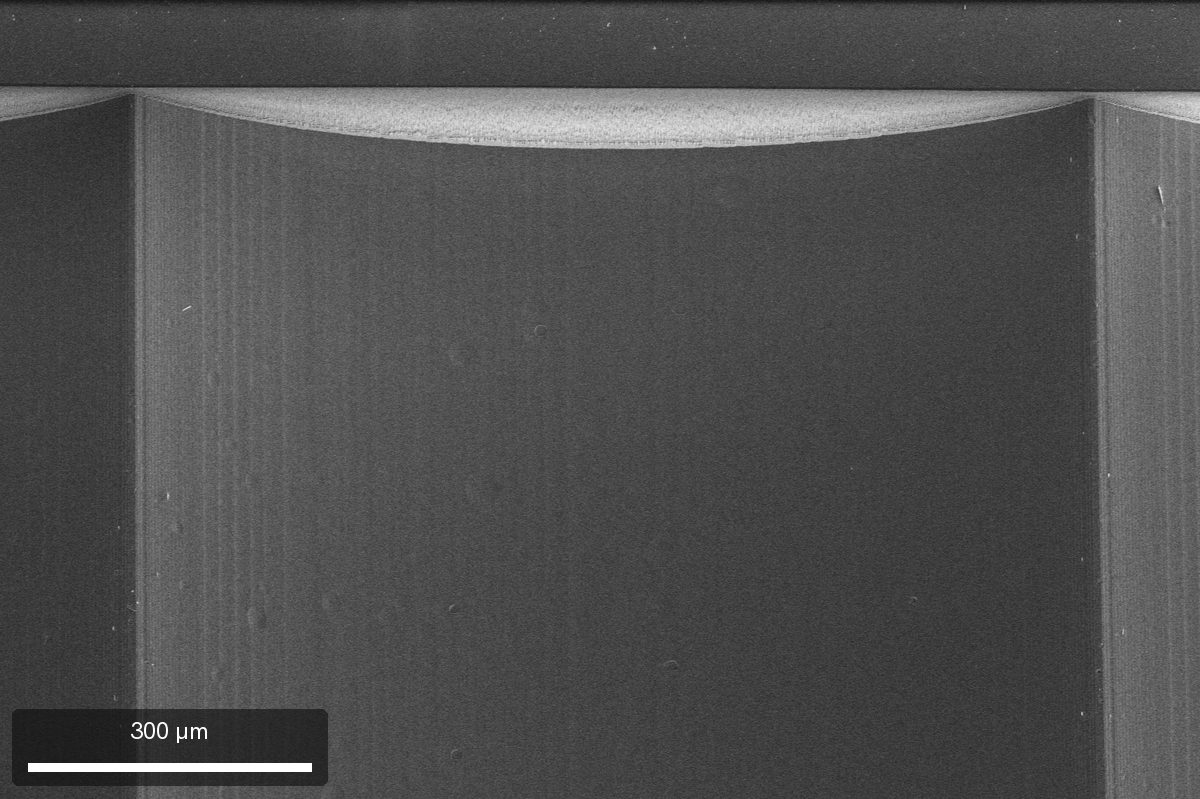
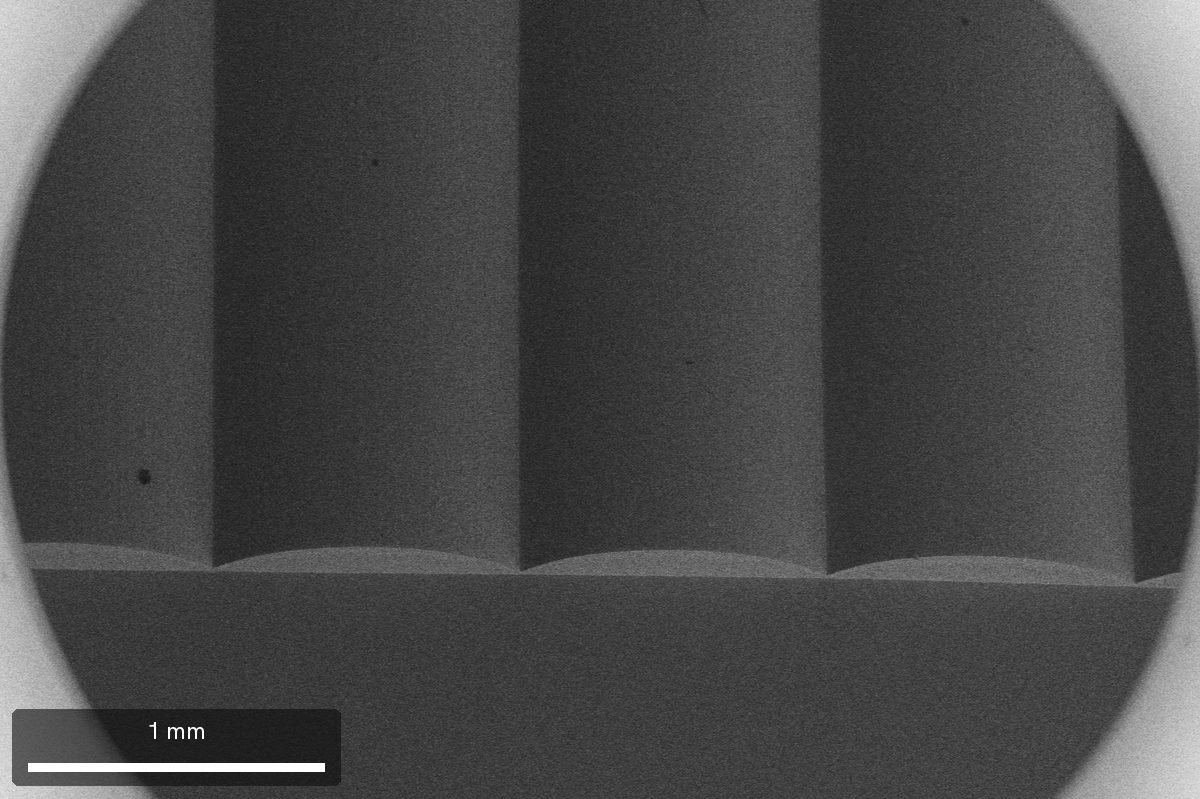
A silicon master with concave cylindrical profiles, and the nickel replica moulded from it, where the profiles become convex lenses. The master can be reused to make many replicas.
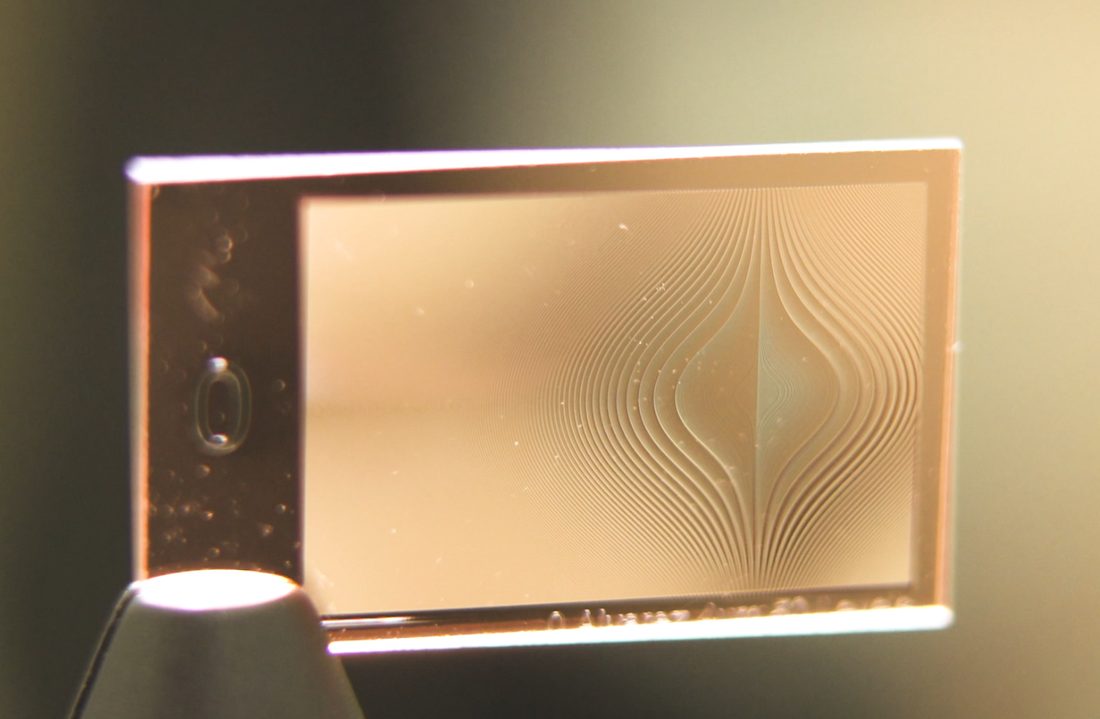
One plate of an Alvarez lens pair. Sliding the two plates against each other changes the focal length continuously.
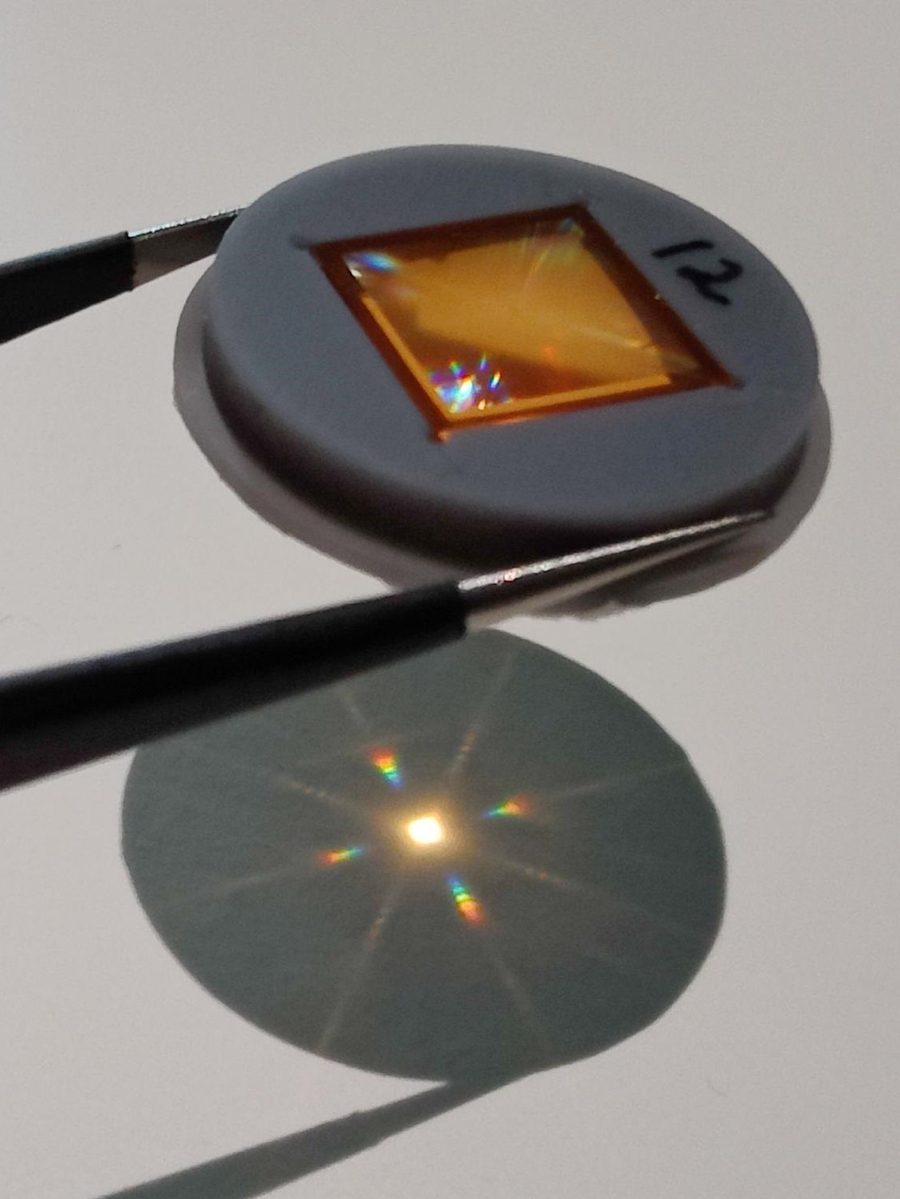
A fabricated diffractive lens in its holder, focusing light to a bright spot on the surface below.

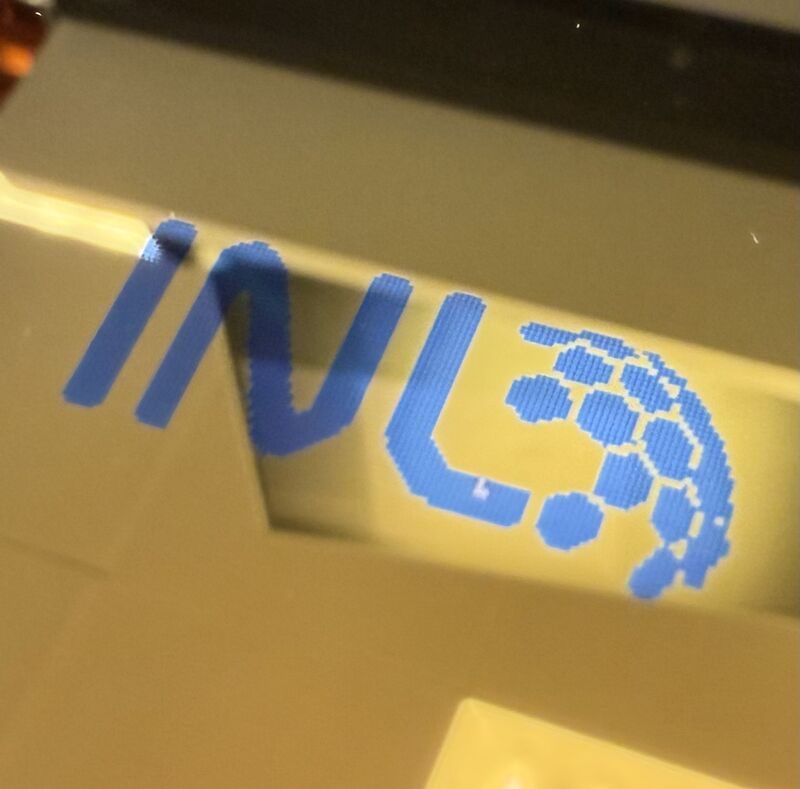
The INL logo written on a wafer with our laser interference lithography system, by raster exposure of grating pixels. Each pixel diffracts light at an angle set by its pitch, so the logo changes colour with viewing angle.
All devices on this page were fabricated in the INL cleanroom, International Iberian Nanotechnology Laboratory, Braga, Portugal.
Some of these devices were developed in publicly funded research projects at INL, supported by: